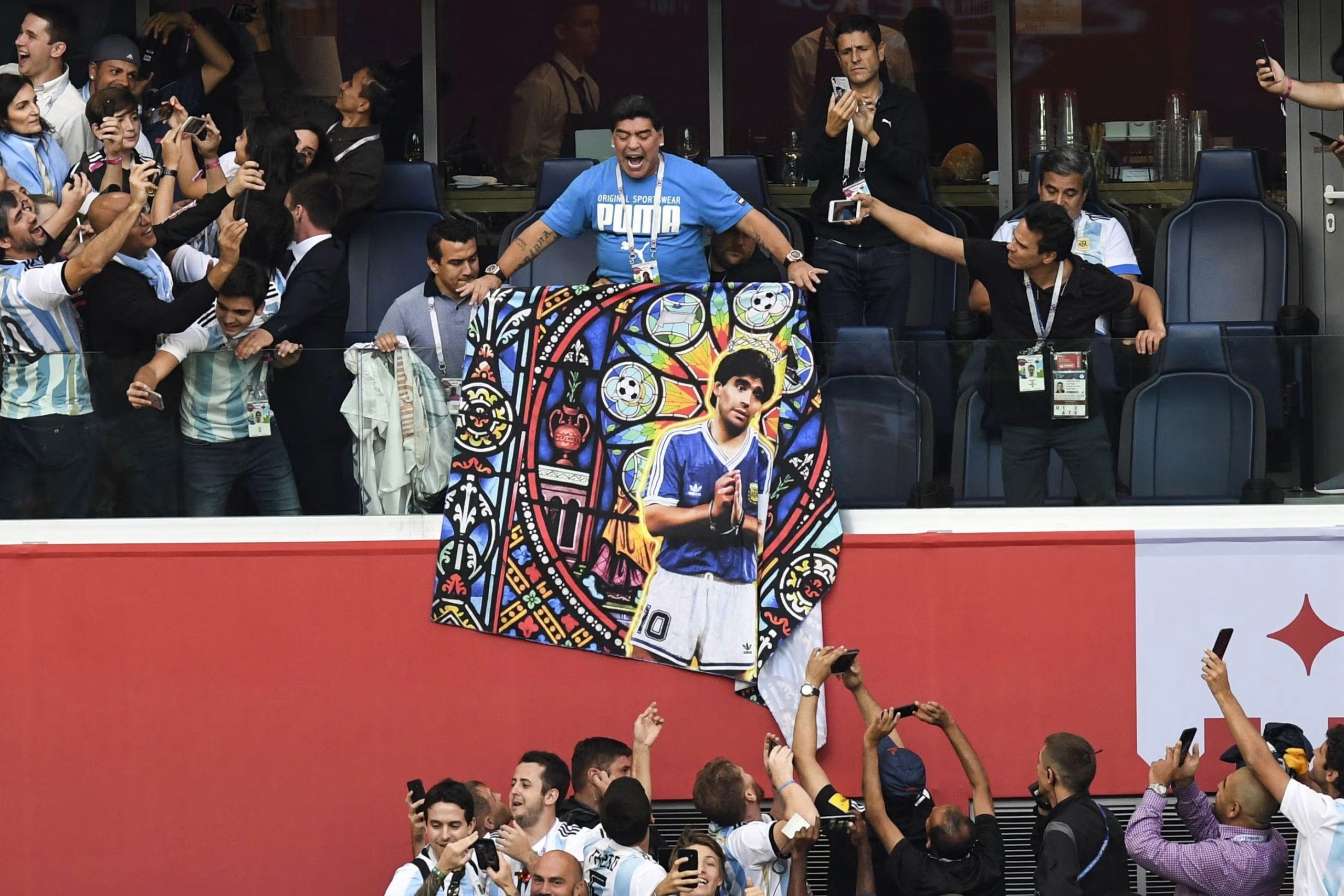
Diego Maradona’s World Cup story is usually told through icons and headlines, but if you watch his tournaments closely you see a repeatable pattern of structure built around one player’s extraordinary capacity to receive, turn, and break games open. Understanding how Argentina shaped their systems for him, and how opponents tried to contain him, turns every full match or extended highlight into a lesson in how one player can bend match flow and space to his will without ever leaving the pitch’s constraints.
Why Maradona’s World Cup Career Matters for Live Match Viewers
Across four World Cups, but especially in 1986 and 1990, Maradona operated as a moving reference point that dictated where games were played and how defensive blocks behaved. He was not just a highlight-machine; his constant involvement in the final third, volume of carries, and ability to draw fouls forced opponents to shift lines and double up in areas they would normally cover with one player. For live viewers today, those matches are a reference for reading how a true system leader looks on screen: touches in key zones, repeated patterns of support runs, and the way team-mates and rivals reorganise around a single figure.
How Argentina’s Shape Gave Him Freedom and Support
At Mexico 1986, Carlos Bilardo built a flexible structure—moving between a diamond midfield and a 3‑5‑2—that deliberately placed Maradona at the tip of the system with licence to roam. In their 3‑5‑2, wing-backs provided width while Maradona, Jorge Valdano and Jorge Burruchaga formed a rotating front trio, with Maradona free to drop into half-spaces or drift wide to receive the ลิงค์ดูบอล goaldaddy on the move. That compact but aggressive shape meant Argentina could protect central zones without the ball, then explode into transitions with three coordinated attackers once Maradona found space to turn, which you can see in the way counters often flow through him before reaching runners ahead.
What His Dribbling Actually Did to Defensive Structures
Maradona’s dribbling combined tight control, a low centre of gravity and sudden changes of speed that made him exceptionally hard to stop without committing fouls, especially in congested areas. At the 1986 World Cup he was the most fouled player in the tournament, with over fifty fouls won, and he completed more than fifty successful take-ons, a single‑edition record that still stands. When you watch those games, the key is not just the number of players he beats but what happens to the defensive line: each time he carries the ball past one or two opponents, others are dragged out of position, opening spaces for cut-backs, through balls or late runs around the edge of the box.
How His Passing Turned Pressure Into Final-Third Chances
Statistics and retro analysis show that a high percentage of Maradona’s received passes came in the final third, and he ended Mexico 86 with five goals and five assists, directly contributing to the majority of Argentina’s goals. Because he could drop into deeper half-spaces as well as operate between the lines, he consistently had multiple passing options: lofted balls over defences, quick through passes into Burruchaga’s runs, or switches to advancing wing-backs. For live viewers, that means his genius is as visible in the passes that pre‑assist the final ball as in the obvious killer pass, so it is worth tracking how moves begin when he first receives under pressure rather than only when the ball reaches the scorer.
How Opponents Tried to Contain Him at World Cups
Different opponents chose different methods to limit Maradona, and their choices are clear if you watch a few full matches in sequence. England in 1986 avoided strict man-marking, opting instead to have the nearest player press while the rest of the shape stayed conservative and narrow, which reduced their own attacking support but did not prevent Maradona from finding central pockets. Belgium tried to swarm him quickly in central zones, pressing as soon as he received, yet his second goal in the semi-final shows how a single successful dribble through a pressing wave can dismantle that plan, as he drives through multiple players and finishes. West Germany in the final, by contrast, assigned Lothar Matthäus a tighter man-marking role, which did limit Maradona’s influence for long periods but could not prevent him from supplying the decisive through ball for Burruchaga’s winner when space finally appeared.
How to Watch a Maradona Match in Real Time
Because his influence is continuous rather than limited to isolated moments, it helps to watch Maradona with a clear set of focus points rather than waiting only for famous dribbles or the “Hand of God”. Before kick-off, note his starting position on paper—often a “number 10” or second striker—and then immediately compare it with his real average position over the first 10–15 minutes.
A simple three-step approach works well when you are following a full 90 minutes:
- Track where he first receives the ball from defenders or deep midfielders (central, half-space, or wide) and how many touches he takes before releasing it.
- Observe how many opponents converge when he carries the ball, and which team-mates move into the space he vacates or opens.
- Watch how opponents adjust over time—do they drop deeper, assign a man-marker, or start fouling early between the lines to prevent him turning.
Once you do this over a couple of matches, you start to see patterns in how his teams lean on his gravity: defenders look for him first under pressure, midfielders time forward runs around his movements, and opponents’ lines either stretch trying to step out to him or compress to keep him away from central pockets. That lens is transferable; you can use it today when watching any side built around a primary creator who constantly receives under pressure in advanced zones.
A Snapshot Table of His 1986 World Cup Influence
To anchor what you see on screen, it helps to keep a simple profile of Maradona’s 1986 output in mind, combining basic numbers with tactical meaning. The table below offers a condensed view of how often he was involved, where, and what that translated to over the tournament.
| Metric (Mexico 86) | Approximate value | Tactical meaning when watching live |
| Games played | 7 | Ever-present focal point throughout the tournament |
| Goals | 5 | Direct scoring threat as well as creator |
| Assists | 5 | Constant final-third connection for team-mates |
| Completed take-ons | 50+ | High-volume ball carrier breaking lines repeatedly |
| Fouls won | 50+ | Opponents forced to stop him illegally between the lines |
When you rewatch Argentina’s 1986 matches with these figures in mind, you can better judge whether a particular game is typical or exceptional for his tournament. A match with fewer dribbles but more decisive passes, or one where he wins a huge number of fouls but creates only one clear chance, still fits the same core pattern: he is always the hub that bends defensive behaviour and field geography, even when the highlight reel only shows one or two spectacular actions.
Summary
Maradona’s World Cup legacy becomes clearer when you focus on how he changed match flow rather than only on individual moments. Argentina’s structures at Mexico 86 were built to keep him constantly involved in the final third, and his blend of dribbling, foul-winning and passing—backed by numbers like five goals, five assists and a record volume of successful take-ons—forced opponents to reshape their defensive plans around him in every game. If you watch his matches with attention to where he receives, how defenders react, and how team-mates run off his movements, you get a more precise sense of why World Cups “never forget” him: he turned entire tournaments into stories told through his touches as much as through the scorelines.